Why vocabulary works on a quiz-show board
Knowing a word is five skills: recognize the definition, produce the word from a definition, use it in a sentence, pick it over a near-synonym, and read it correctly in context. A five-column board can give each skill a column, which means a team cannot win on flashcards alone. The value ladder then runs from recognition to production inside each column.
Category ideas for vocabulary jeopardy
Five columns, five values each. Copy a set as it stands, or swap in the names of your own units. The board draws your categories in the order you type them.
Weekly word list
The default board for any list of 10 to 25 words. Use It in a Sentence is judged by the class: does the sentence show the meaning, or just contain the word?
Word parts
Guess the Meaning gives an unfamiliar word made of familiar parts and asks for a definition. It teaches the skill the test rewards: reading a word you have never seen.
Academic vocabulary
Test Directions reviews analyze, compare, justify, summarize. Which Subject? gives a word with different meanings in two classes (mean, table, product) and asks for both.
How to mix difficulty from 100 to 500
The value is a promise to the class about how hard the question is. Keep the promise and teams will reach for the 500s.
- 100RecognizeWhich word means 'to make something smaller'?
- 200ProduceHere is the definition. What is the word?
- 300Choose between near-synonymsWhich fits better here, 'reduce' or 'diminish', and why?
- 400Use itWrite a sentence that shows the meaning of 'reluctant' without using the word 'not'.
- 500Explain from contextRead the sentence. What does the word mean here, and which words told you?
Running vocabulary jeopardy with teams
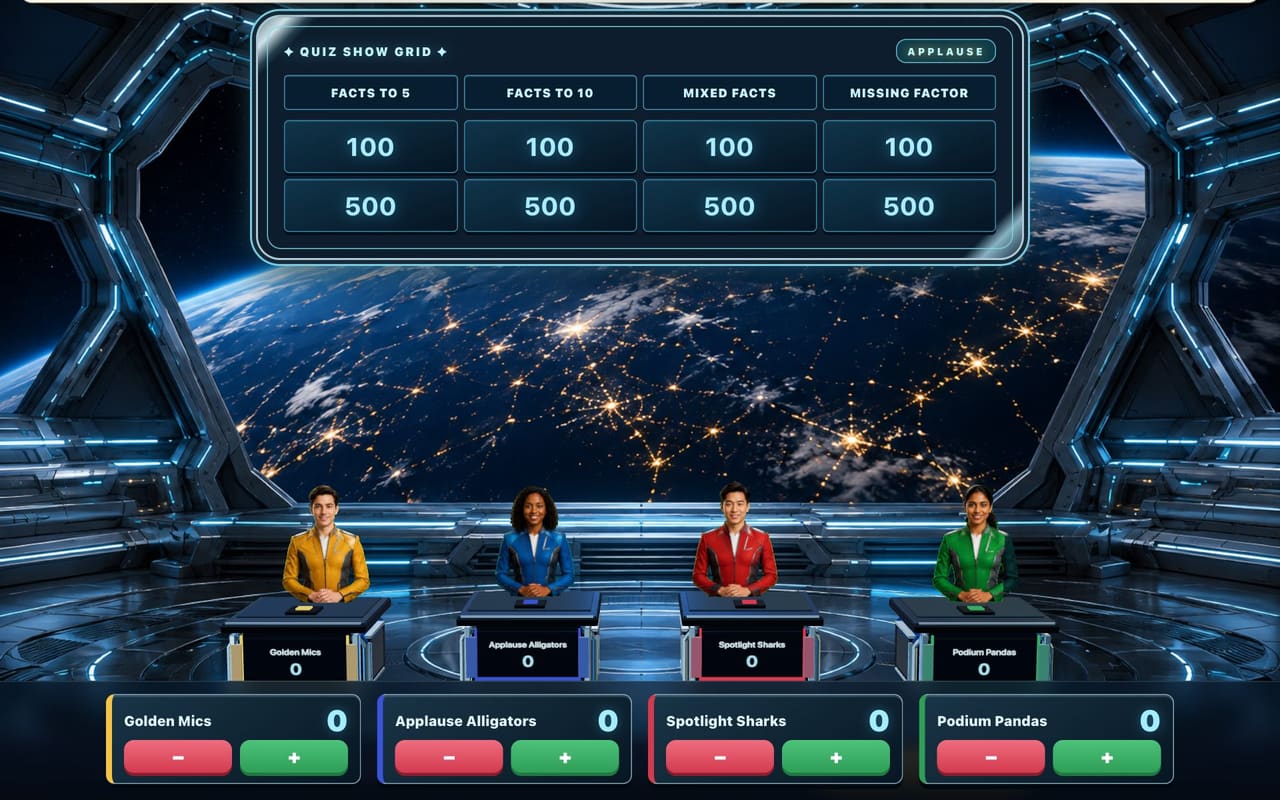
Quiz Show Grid runs 2 to 8 teams from one screen, with a scorecard for each. These four rules keep every team working every question.
- 1
Whiteboards for every team. Vocabulary cells that are shouted out are won by the fastest talker; cells that are written are won by the team that knows the word.
- 2
On Use It in a Sentence cells, let the class vote on whether the sentence shows the meaning. 'I was reluctant' earns 100; 'I was reluctant to open the letter because I knew it was bad news' earns the cell.
- 3
Put the word on the board, then read it aloud. Pronunciation is part of knowing it, and students will not ask otherwise.
- 4
Rotate the writer every cell so the student who most needs the word is the one writing it.
Build the board in 3 steps
- 1
Pick or build a question bank
Open Quiz Show Grid and choose a bank from My Question Banks. No bank yet? Create with AI: pick the subject and grade, add a note about the topic, and it drafts 5 to 20 questions you edit before you play.
- 2
Set teams and categories
Choose 2 to 8 teams and name them, or let the game pick names. Type your category names, comma separated. Up to 25 questions fill one board at 100 to 500 points; a bigger bank adds a second board.
- 3
Start the show
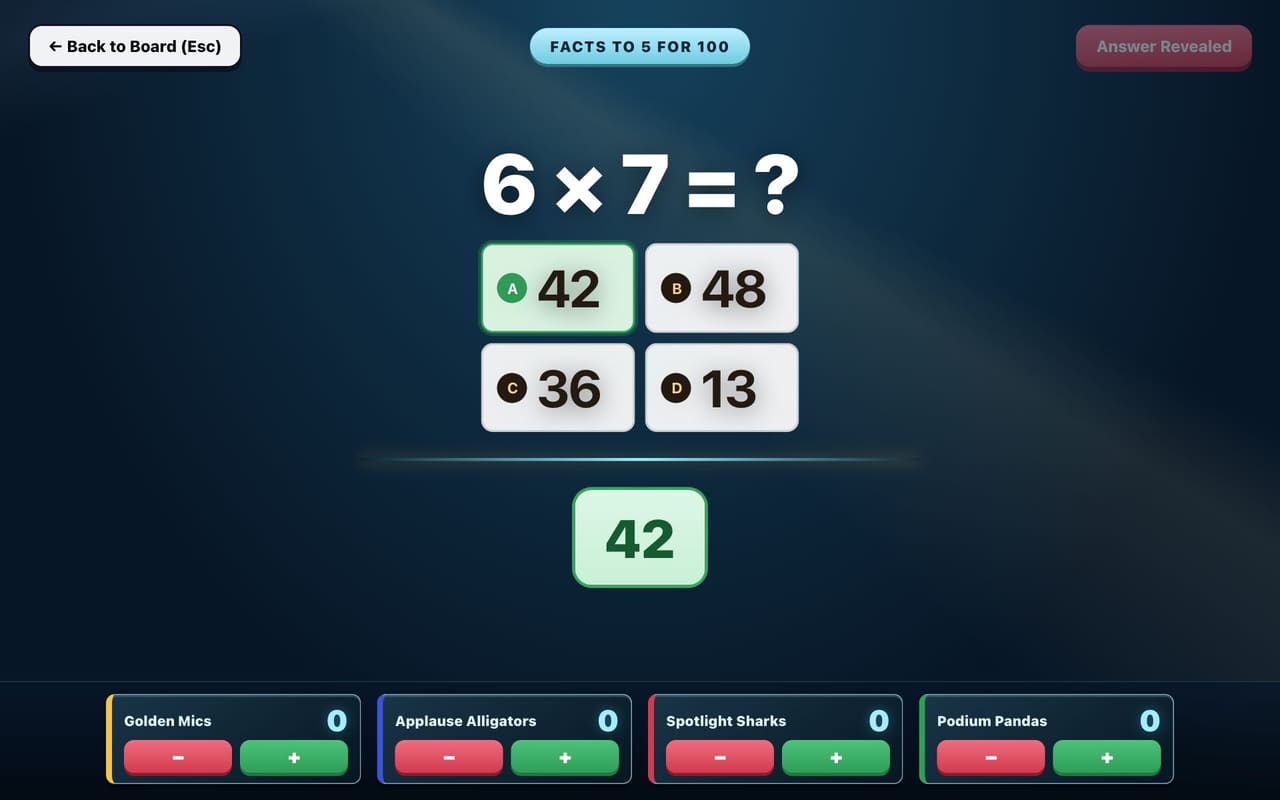
Tap a cell and the question fills the screen. Press Reveal Answer (or the spacebar), tap + on every team that earned it, and Esc back to the board. Clear the board and Crown the Champions.
Vocabulary jeopardy questions, answered
How many words do I need?
Twenty-five cells is five words per column at five levels, or more words with one question each. A list of 15 words gives a three-row board, which is right for a weekly review.
Can the AI write the questions from my word list?
Create with AI takes a subject and grade plus a note. Paste your word list into the note and ask for definitions, sentences and context clues, then edit what it drafts before you play.
Can students play the same words on their own devices afterward?
Yes. The same question bank runs the Arcade games, so the whiteboard review on Thursday can be independent practice on Friday.