Why US history works on a quiz-show board
The course rewards students who can connect events, not just list them, and the value ladder is where you build that in. A 100 cell names a president. A 300 cell matches an amendment to a case. A 500 cell asks a team to explain how a decision in one unit shaped an event in another. Students see the ladder on the board and learn what the harder questions want.
Category ideas for US history jeopardy
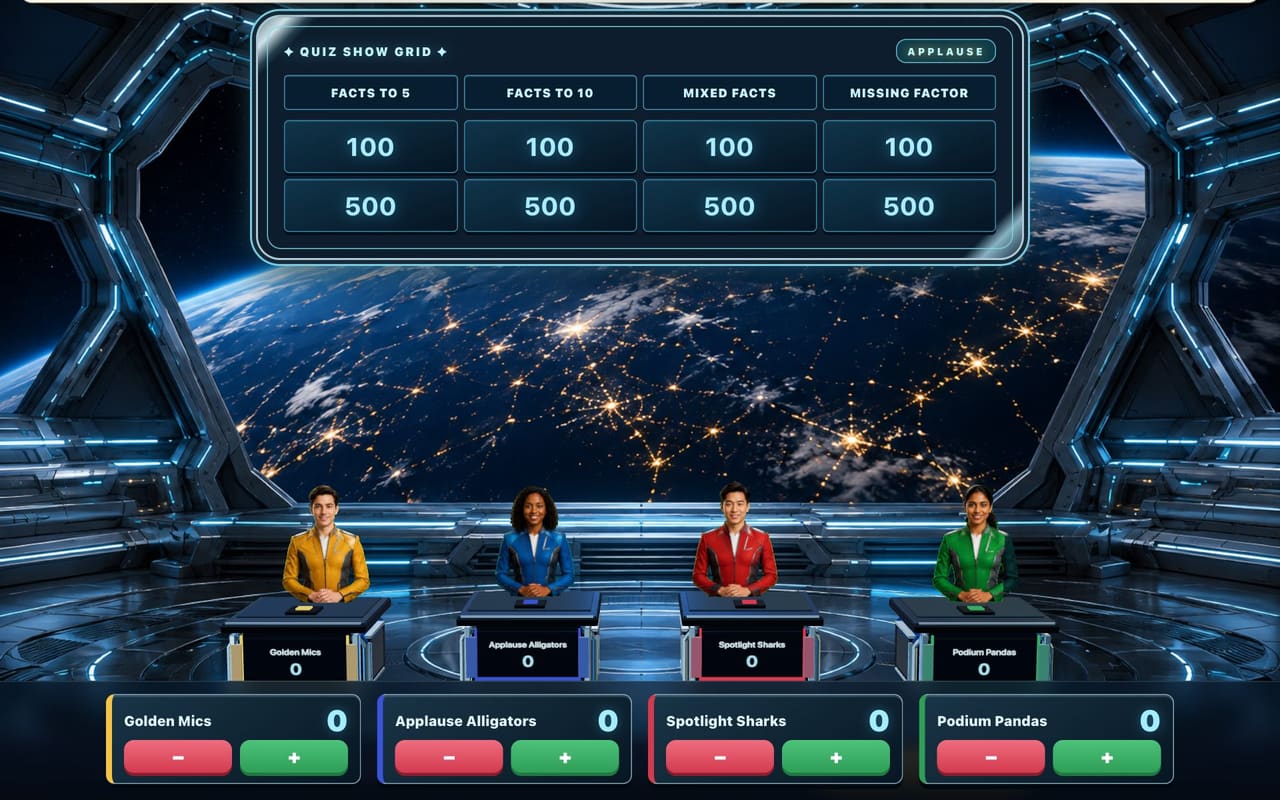
Five columns, five values each. Copy a set as it stands, or swap in the names of your own units. The board draws your categories in the order you type them.
Founding era
The Constitution column scales from 'how many branches' at 100 to 'why did the framers choose the Electoral College' at 500. Bill of Rights works as which-amendment-protects-this.
Civil War through Progressive Era
Reformers is name-the-person from a description of what they fought for. Reconstruction is the cause-and-effect column: what each amendment changed and what undid it.
Twentieth century
Supreme Court pairs the case name with the principle. Civil Rights should include dates, people and tactics so the column cannot be won on names alone.
How to mix difficulty from 100 to 500
The value is a promise to the class about how hard the question is. Keep the promise and teams will reach for the 500s.
- 100Name itWho wrote the Declaration of Independence? Which amendment ended slavery?
- 200Place itIn which decade did the Great Depression begin? Which war ended with the Treaty of Paris in 1783?
- 300Match or orderMatch the case to the principle: Marbury v. Madison, Plessy v. Ferguson, Brown v. Board.
- 400Cause or effectName one economic cause of the Civil War and explain it.
- 500Connect across unitsHow did the Fourteenth Amendment matter again in the 1950s? Give the case and the clause.
Running US history jeopardy with teams
Quiz Show Grid runs 2 to 8 teams from one screen, with a scorecard for each. These four rules keep every team working every question.
- 1
Every team writes every answer. Name the recorder before each cell so the job rotates and the quiet students hold the marker too.
- 2
On 400 and 500 cells, score the explanation. A right name with no reason earns 100; a reasoned answer that gets a date slightly wrong can still earn the cell.
- 3
Give each team one 'consult the notes' token per game. It costs nothing but they can only use it once, which makes them decide which question is worth it.
- 4
If one team runs away with it, open the Supreme Court or Connect Across Units column last; those cells are where a trailing team catches up.
Build the board in 3 steps
- 1
Pick or build a question bank
Open Quiz Show Grid and choose a bank from My Question Banks. No bank yet? Create with AI: pick the subject and grade, add a note about the topic, and it drafts 5 to 20 questions you edit before you play.
- 2
Set teams and categories
Choose 2 to 8 teams and name them, or let the game pick names. Type your category names, comma separated. Up to 25 questions fill one board at 100 to 500 points; a bigger bank adds a second board.
- 3
Start the show
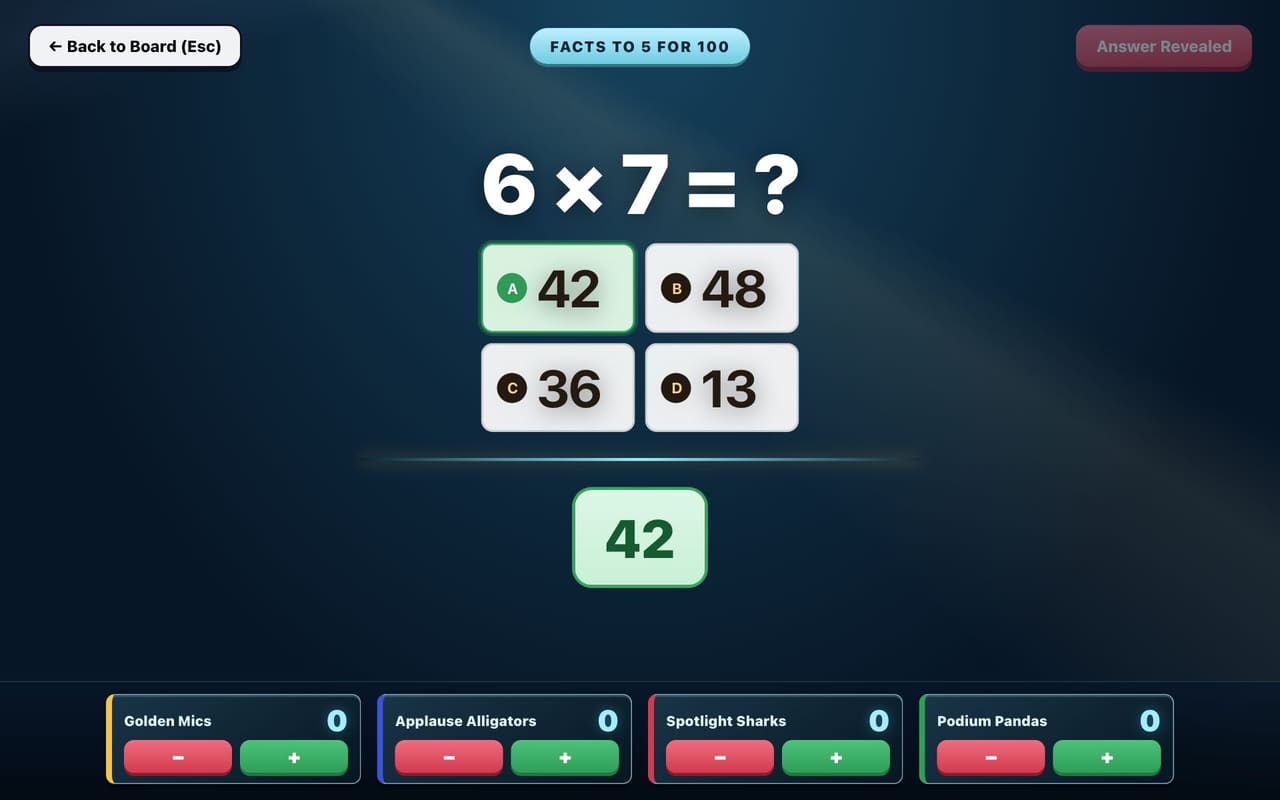
Tap a cell and the question fills the screen. Press Reveal Answer (or the spacebar), tap + on every team that earned it, and Esc back to the board. Clear the board and Crown the Champions.
US history jeopardy questions, answered
Can one board cover the whole semester?
Yes. Load more than 25 questions and the game adds boards; a 50-question bank is two full boards. Name the categories by unit so students know where each column lives in their notes.
How do I write a good 500-point US history question?
Ask for a connection or a judgment: how one event changed another, or which of two causes mattered more and why. Require a reason in the answer.
Does the game work for a STAAR or state test review?
It works for any review because you write the questions. Build the bank from your state's released items or your own notes; the board does not depend on a particular standard set.