Why history works on a quiz-show board
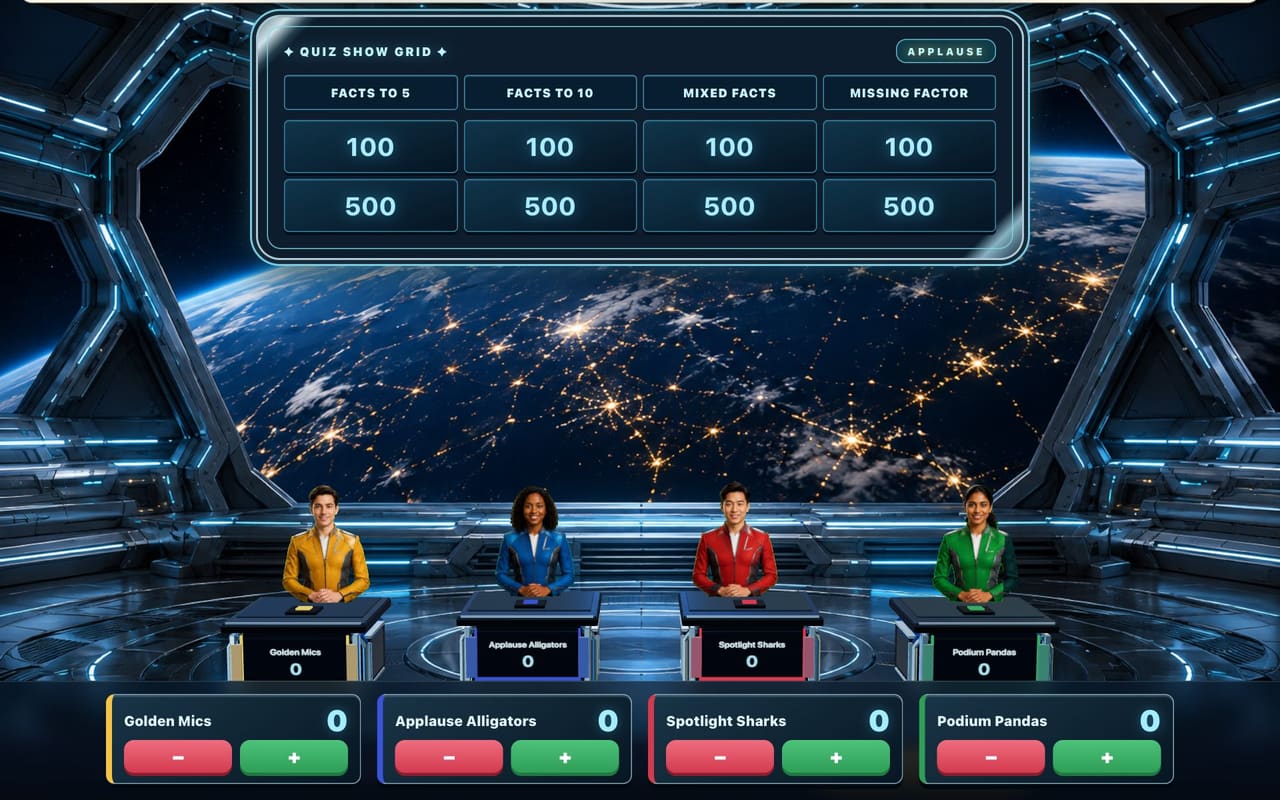
History has facts worth knowing and arguments worth having, and a board can hold both. Name the year goes in the 100 row. Put these four events in order goes in the 300 row. Explain why this treaty failed goes in the 500 row where a team has to talk before it answers. Category names by era or by theme tell students which chapter to reach back into.
Category ideas for history jeopardy
Five columns, five values each. Copy a set as it stands, or swap in the names of your own units. The board draws your categories in the order you type them.
Unit review by theme
The same five themes work for any unit from ancient Rome to the Cold War. Primary Sources quotes a short line and asks who said it, when, or why it mattered.
Chronology board
A board built entirely on sequence is the fix for a class that knows the events but not the story. Before or After? is fast; Put Them in Order is a whiteboard cell.
Semester final
Big Ideas asks for the pattern across units: what do these three revolutions have in common? Save it for the end when teams have the whole board in their heads.
How to mix difficulty from 100 to 500
The value is a promise to the class about how hard the question is. Keep the promise and teams will reach for the 500s.
- 100Who, what, whereWho was the first emperor of Rome? On which continent is Mesopotamia?
- 200When, roughlyIn which century did the printing press spread through Europe?
- 300Sequence or matchPut these four events in order. Match the leader to the movement.
- 400Cause or effectName one cause of the fall of the Western Roman Empire and explain it in a sentence.
- 500ArgueWas the Treaty of Versailles more a cause of peace or of the next war? Give two reasons.
Running history jeopardy with teams
Quiz Show Grid runs 2 to 8 teams from one screen, with a scorecard for each. These four rules keep every team working every question.
- 1
Whiteboards for every team. History teams otherwise let the one student who reads ahead answer everything; writing forces the rest to commit.
- 2
On 400 and 500 cells, award the points for the reasoning, not the recall. A team that names the wrong year but explains the right cause earns the cell.
- 3
Let a team 'appeal' one answer per game. The appeal is a 30-second argument; the class votes. It teaches more than the question did.
- 4
Order the columns from most to least familiar so early picks bank points and the unfamiliar material is where the game is decided.
Build the board in 3 steps
- 1
Pick or build a question bank
Open Quiz Show Grid and choose a bank from My Question Banks. No bank yet? Create with AI: pick the subject and grade, add a note about the topic, and it drafts 5 to 20 questions you edit before you play.
- 2
Set teams and categories
Choose 2 to 8 teams and name them, or let the game pick names. Type your category names, comma separated. Up to 25 questions fill one board at 100 to 500 points; a bigger bank adds a second board.
- 3
Start the show
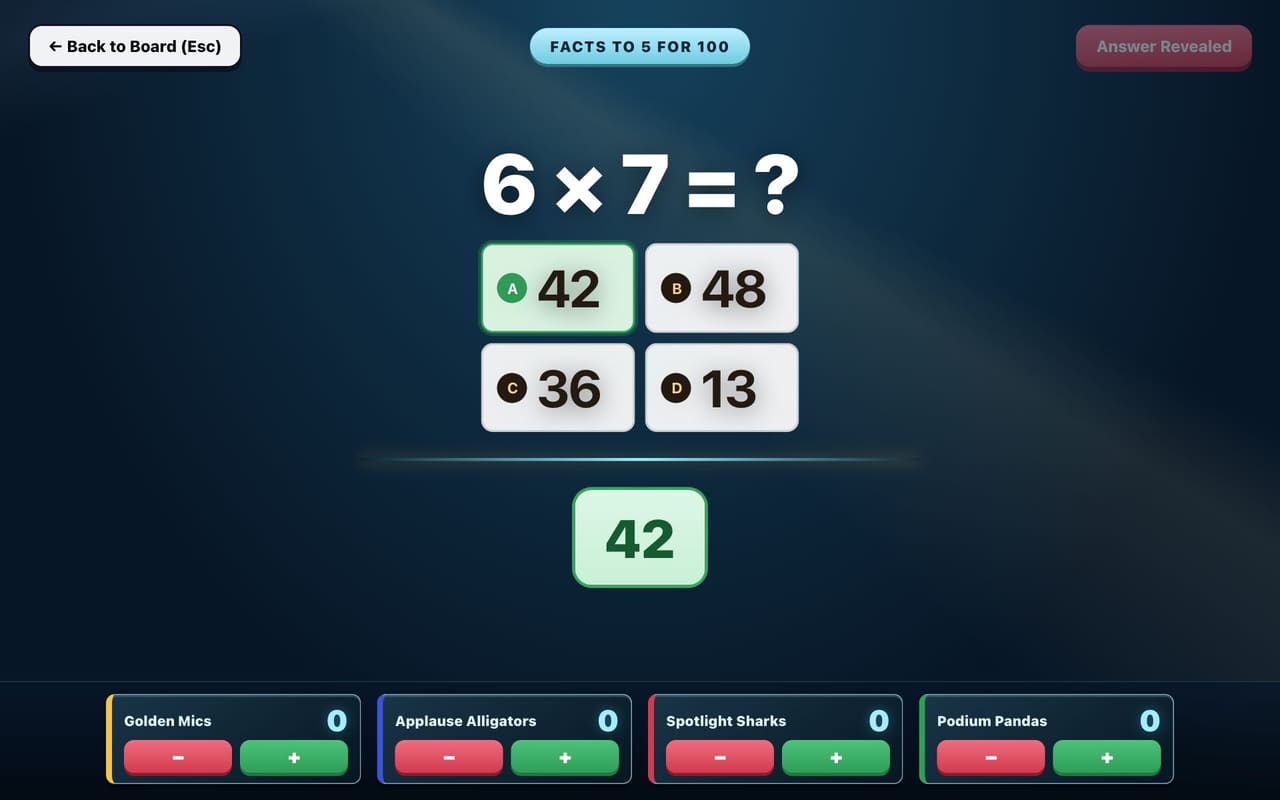
Tap a cell and the question fills the screen. Press Reveal Answer (or the spacebar), tap + on every team that earned it, and Esc back to the board. Clear the board and Crown the Champions.
History jeopardy questions, answered
Can I use quotes or short documents in a question?
Yes. Paste a short quote into the question text and ask who said it or what it argued. Keep it to a sentence or two so it reads on a projector.
How do I keep it from becoming a dates quiz?
Write the dates into the 100 and 200 rows only and make the 400 and 500 rows cause, effect and argument. The board shows the ladder, so students see the climb.
Can I run the same board for two classes?
Yes. Reset Game clears the scores and the board stays. The bank itself lives in your account and can be played any number of times.