Why biology works on a quiz-show board
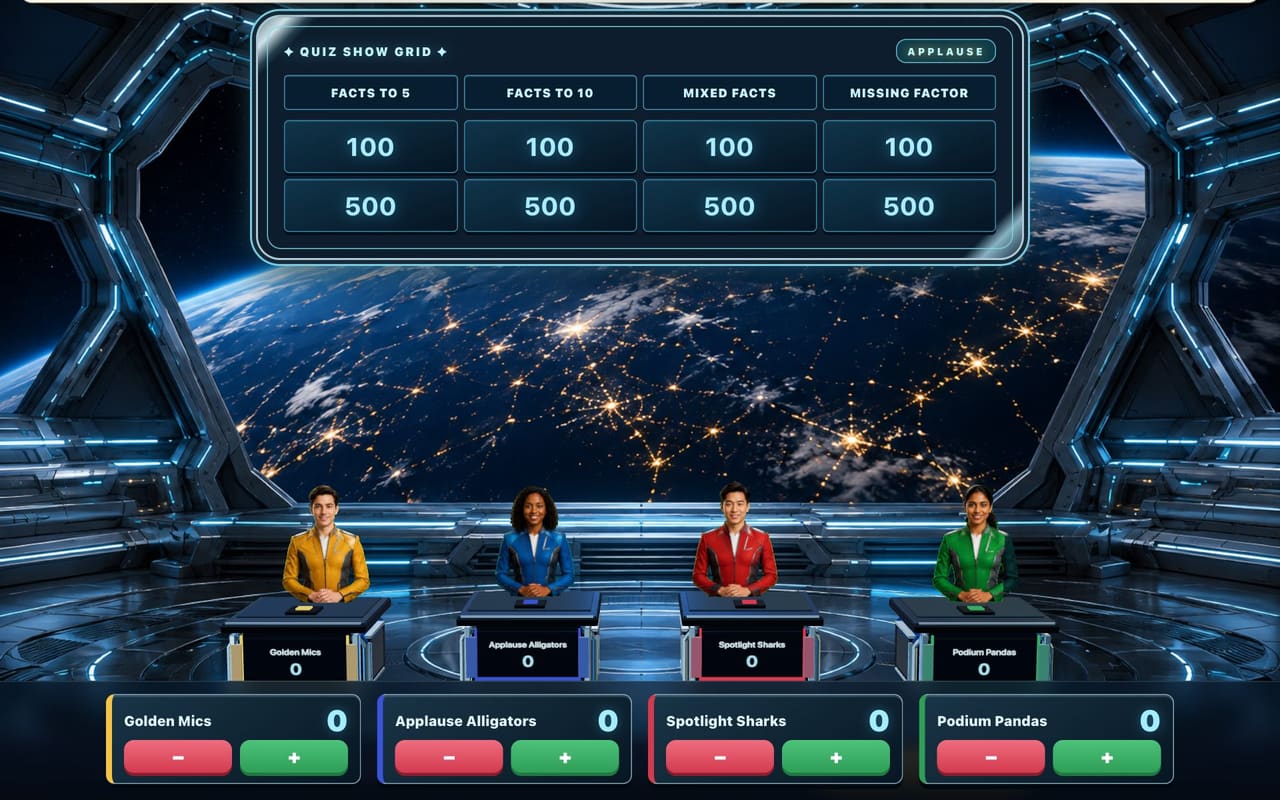
Biology has the heaviest vocabulary load in the science sequence and the most 'why' questions behind it. A board makes room for both. The 100 row is where the vocabulary lives. The 500 row is where a team reads a Punnett square, a pedigree described in words, or an ecosystem scenario and has to argue for an answer.
Category ideas for biology jeopardy
Five columns, five values each. Copy a set as it stands, or swap in the names of your own units. The board draws your categories in the order you type them.
Cells and energy
Compare and Contrast is the column of pairs: plant versus animal cell, osmosis versus diffusion, mitosis versus meiosis. Teams must give one similarity and one difference.
Genetics
Punnett Squares scale cleanly: a monohybrid cross at 200, a dihybrid ratio at 500. Describe the cross in words and have teams draw the square on whiteboards.
Evolution and ecology
Evidence asks teams to name the type of evidence described (fossil, homologous structure, DNA). Human Impact is scenario based and works best as the final column.
How to mix difficulty from 100 to 500
The value is a promise to the class about how hard the question is. Keep the promise and teams will reach for the 500s.
- 100DefineWhat is the term for an organism's observable traits?
- 200Identify in contextWhich organelle is most abundant in a muscle cell, and why?
- 300Apply one ruleCross Bb × bb. What fraction of offspring show the recessive trait?
- 400InterpretA pedigree shows an affected child with two unaffected parents. Dominant or recessive? Explain.
- 500Argue from evidenceA beetle population turns darker over ten generations after a factory opens. Explain the mechanism in three steps.
Running biology jeopardy with teams
Quiz Show Grid runs 2 to 8 teams from one screen, with a scorecard for each. These four rules keep every team working every question.
- 1
Whiteboards for every team. Genetics cells in particular need everyone drawing the square, not one team drawing while four watch.
- 2
Make reasons worth money. On 400 and 500 cells, a correct answer with no explanation earns 100. Say the rule before the first pick.
- 3
Use Compare and Contrast cells to slow the game down on purpose. Two teams give answers; the class votes on which comparison was more precise.
- 4
Rotate a 'process checker' on each team who must restate the question before the team answers. Biology questions are long, and half the wrong answers come from answering a different question.
Build the board in 3 steps
- 1
Pick or build a question bank
Open Quiz Show Grid and choose a bank from My Question Banks. No bank yet? Create with AI: pick the subject and grade, add a note about the topic, and it drafts 5 to 20 questions you edit before you play.
- 2
Set teams and categories
Choose 2 to 8 teams and name them, or let the game pick names. Type your category names, comma separated. Up to 25 questions fill one board at 100 to 500 points; a bigger bank adds a second board.
- 3
Start the show
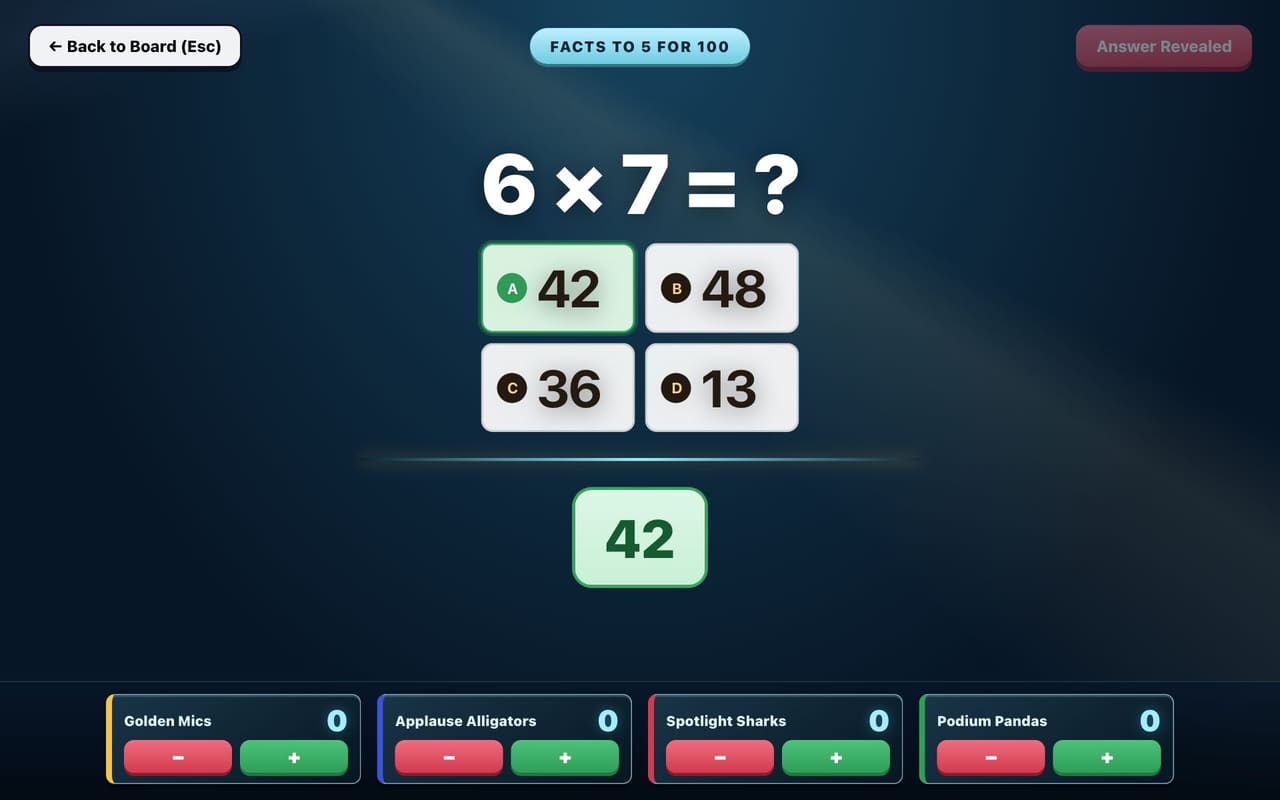
Tap a cell and the question fills the screen. Press Reveal Answer (or the spacebar), tap + on every team that earned it, and Esc back to the board. Clear the board and Crown the Champions.
Biology jeopardy questions, answered
Can I show a Punnett square or a diagram on the board?
Board questions are text, so describe the cross or the figure, or project it on a slide beside the board. Teams draw the square on whiteboards and you reveal the ratio to check.
How many questions per category should I write?
Five per category fills a 5-by-5 board. Write one question for each value level, from a definition at 100 to an explain-the-mechanism at 500.
Does the same bank work for a final exam review?
Yes. Load more than 25 questions and the game adds a second board. Many teachers build one board per unit through the year and chain them for the final.